"Laura felt a warmth inside her. It was very small, but it was strong. It was steady, like a tiny light in the dark, and it burned very low but no winds would make it flicker because it would not give up."
— Laura Ingalls Wilder (The Long Winter)
When I was growing up, I read a lot. No, I mean I actually read everything I could get my hands on. I was particularly fond of Laura Ingalls Wilder’s Little House on the Prairie series. I felt an affinity with Laura and her older sister Mary. I was a little bit like both of them. Laura’s tomboyish ways and love of mischief fit me to a tee, but I also loved the bookish, quietness of Mary.
My favorite book in the series was The Long Winter, but the hardships that Laura and her family and the whole town faced during the terrible blizzard of 1880 didn’t resonate with me from personal experience. I had never come up against anything remotely comparable to those tough times. The closest I came was living on the farm with no inside bathroom and only cold running water that had to be heated on top of the stove. The farmhouse had no insulation and was cold and drafty and we had no central heat, only a coal stove in the kitchen whose heat rose through an open grate to the bedroom above it. There was also a coal stove in the living room and one in my parents’ bedroom. It was lucky for us that my dad hauled coal for a living. I still love to catch a whiff of that acrid smell coming from a chimney, although it is becoming more rare these days.
Our farm lay snuggled between hills and we didn’t get the bitter, driving winds of the prairie. Winds that were so harsh, at times they drove the heavy snow into drifts as high as the top floors of the houses. I don’t remember ever running out of food, because the supply train couldn’t reach town through the ice and snow. We always had a cellar full of canned foods that my mother and sisters diligently put by all summer long. Mom even canned meat when we didn’t have a freezer. I’m sure Caroline Ingalls did those same things, but it was a long, long winter on the prairie, with many mouths to feed.
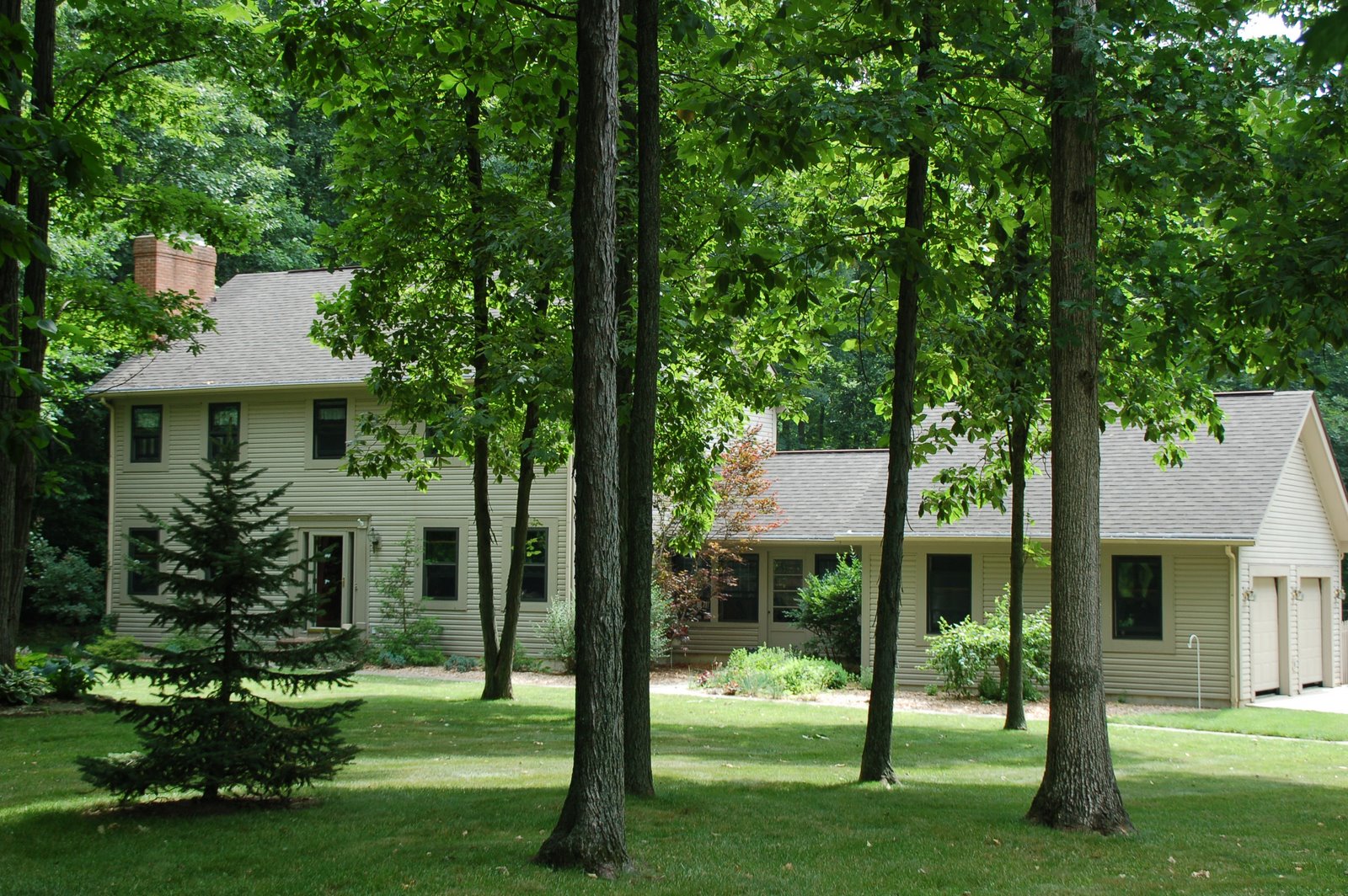
Where we live now, in west central Ohio, is on the far eastern edge of the prairie. It is flat. Our house sits across the road from large open soybean fields and we often get gale force winds that drift the snow in waves across the length of our driveway. Luckily our house is also surrounded by trees that break the force of the wind. Having trees was number one on the must-have list when we moved here almost eleven years ago. The majority of houses that were built here in the last twenty years sit in what once were soybean and corn fields, on five-acre grassed lots. I can just imagine how alone and desolate I would feel living in one of those exposed houses when we’re having a storm of this week’s magnitude, cutting off power and contact with the outside world, even for just a little while.
I had planned to write a post last week on how I am always complaining about winter and how much I hate it. Then I read an article in our Columbus Dispatch by John Switzer, a regular columnist who writes about birds and nature and weather. In the previous week’s column he had written that, only six weeks into winter, he was tired of it, and was hoping for an early spring. He received an email from a disgruntled reader:
"Winter has just started officially, and you are already wishing it over.
"I think your blood is getting thinner with old age. Summer drags on for four or five months, with uncomfortable temperatures in the 80s and 90s, occurring May to October.
"At best, we get two or three months of consistent cold temperatures. For some reason, snow scares the hell out of most central Ohioans. The average snowfall of 30 inches is virtually nothing.
"In case you can’t tell, I love the cold and snow; grew up in the snow belt of Cleveland and miss having real winters."
So, that started me thinking. Without the freezing days of winter, there would be no killing off of pests such as fleas and ticks. We would have no purpose for all the downed trees made into firewood and carefully stacked inside the large barn. And, there would be no maple syrup, which brings me to one of my favorite parts of The Long Winter.
When Almanzo and his brother are nearly out of food, the only thing left for them to cook is flapjacks made with water and buckwheat. They didn’t have any molasses left, which was the most-used sweetener in those days, so they used something like today's brown sugar between the layers of flapjacks. Those pancakes sounded so delicious with the sugar melting a little with the heat, but still retaining a bit of the crunch. My mouth would water at the picture in my mind. There was even an illustration showing the steam rising from those stacks of golden flapjacks.
When Almanzo and his brother are nearly out of food, the only thing left for them to cook is flapjacks made with water and buckwheat. They didn’t have any molasses left, which was the most-used sweetener in those days, so they used something like today's brown sugar between the layers of flapjacks. Those pancakes sounded so delicious with the sugar melting a little with the heat, but still retaining a bit of the crunch. My mouth would water at the picture in my mind. There was even an illustration showing the steam rising from those stacks of golden flapjacks.
When I was old enough to be trusted in the kitchen by myself (by this time, we had moved to town and had a more modern house), I decided to finally experience what Almanzo and his brother had so long ago. I didn’t have buckwheat, so I used self-rising flour, which is what Mom always used. I fried those pancakes in Crisco in an iron skillet until they were golden brown and crispy on the edges, slathered them with lots of butter (I know, not technically correct either), and sprinkled a good layer of brown sugar between each layer. What a disappointment! Oh, they were good. How could they not be with the half pound of butter? I suppose I wasn’t hungry enough, but the brown sugar just didn’t cut it for me. And in those days, I didn’t even know what maple syrup was. The only syrup we ever had was simple sugar syrup that Mom made in a saucepan. Two parts sugar to one part water; boiled. But I much preferred that simple syrup over brown sugar.
Thankfully, my disappointment didn’t ruin my love for Laura Ingalls Wilder’s books and I would read them many times throughout my childhood and even as an adult to my own children.
This brings to mind one winter when our children were young and we lived in the country with rural electric co-op service. We had an ice storm such as we had this week, with one-half inch of ice coating the ancient power lines and the surrounding trees. On top of that, Mother Nature decided to dump twenty inches of heavy, wet snow. Many thousands of residents were without power for a week or more, with temperatures falling into the single digits. We also didn’t have water, even though we had county water lines. The pumping station needed electricity to get the water to us. David had to take five-gallon buckets to the firehouse to fill with water to flush the toilets and also containers for drinking water. Our house survived freezing pipes because we had the foresight to install a cast iron wood-burning stove the first winter after we bought the house. It was a necessity. We couldn’t afford to heat with electricity.
I also used that wood-burning stove to cook our meals that week. To this day, my kids still talk about the sausage and “the best pancakes EVER” that I made in an iron skillet on top of that stove. They were the best pancakes ever. And we topped them with "Mom’s" syrup.


From Mr. Spitzer's column: The name of the February moon is “snow moon” and it will be full on the 18th. The Potawatomi Indians called it the “baby bear moon”, because that is when the mother bears gave birth to their young. Other Indians called it the “hunger moon”.